I would like to observe the works of three contemporary artists who focus on domestic interiors.
Anthony Green is an English painter and printmaker. My very first impression was that his pictures are like cut-outs from a colourful magazine. The multiple viewpoints into one image including a very high one is putting me into the room and far from all the elements at the same time. His figures are in distorted, awkward positions due to the irregular form which is the preferential – and only – option for the shape in his work.
The fact that he simultaneously used several perspectives made me think of Paul Cezanne. Seems like the same idea arised and turned into a powerful message by two different artist born exactly a century apart from each other.
Dickon Drury was born in Salisbury. I was really pleased to discover the work of this young artist. He often paints domestic interiors, birds and still life, too. All his work has a hint of absurd comedy with a fresh and playful imagination of a child.
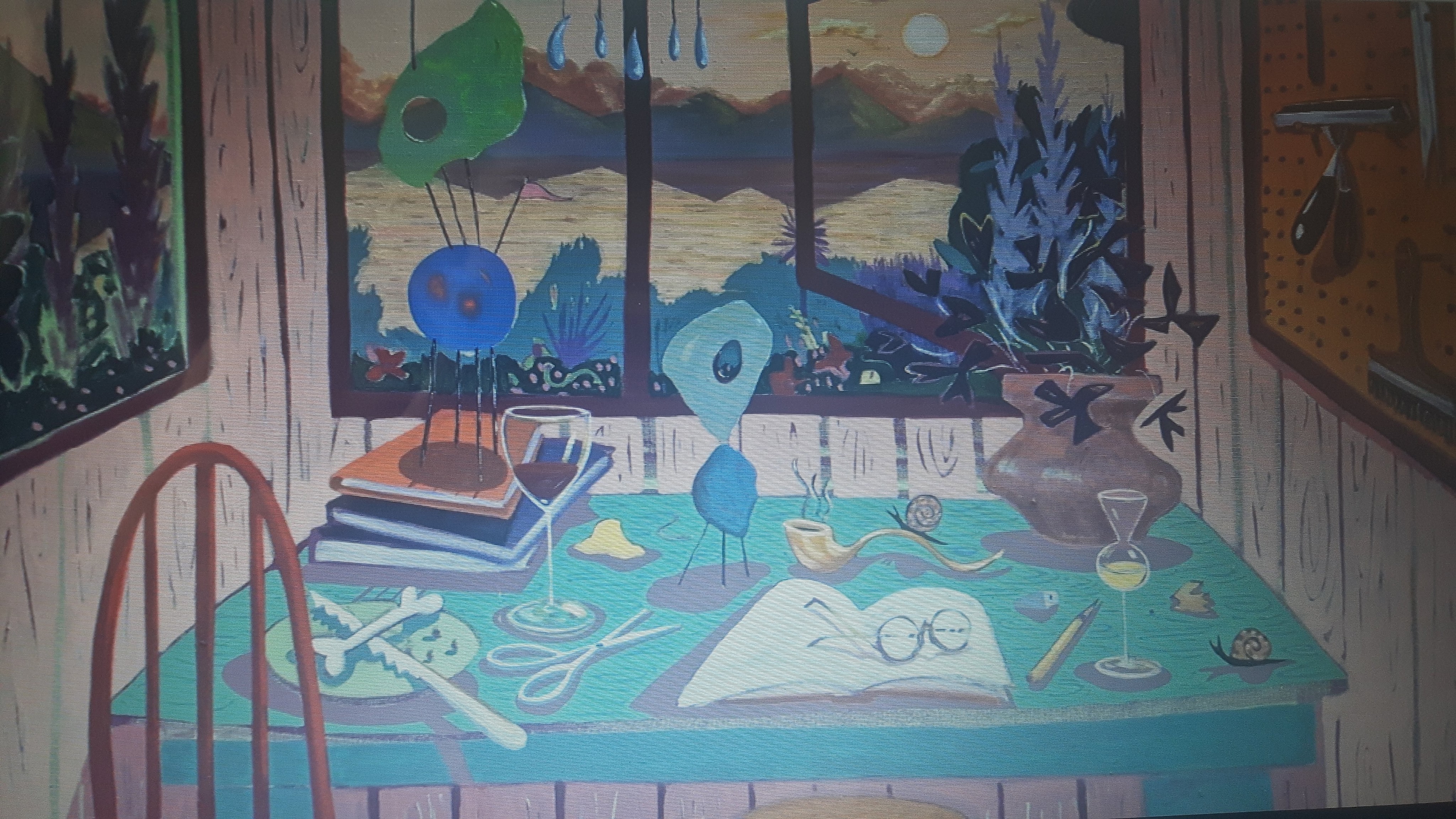
This is a mix of domestic interior and still life. The colours and shapes are bold, simple and calm but the peculiar mix of those carefully picked items and snails (!) are there to surprise us, to stop us walking away, to make us say: Wait!…What?! I assume, the leftover bone on the plate is teasing the good old symbol of the Vanitas paintings from the 16th and 17th centuries.
Roy Lichtenstein was an American artist. Alongside Andy Warhol he became an iconic figure of Pop Art. This art movement started in the 1950s expressing images from the modern popular culture. He has a cartoonish style, his best known works, such as “Drowning girl” and “Whaam” based on panels of comic books. He also created series called “Interiors” and “Waterlilies” in the latter he reworked the impressionism of Claude Monet’s waterlilies. He reproduced other famous painters’ work, for example “Bedroom at Arles” from Vincent van Gogh.
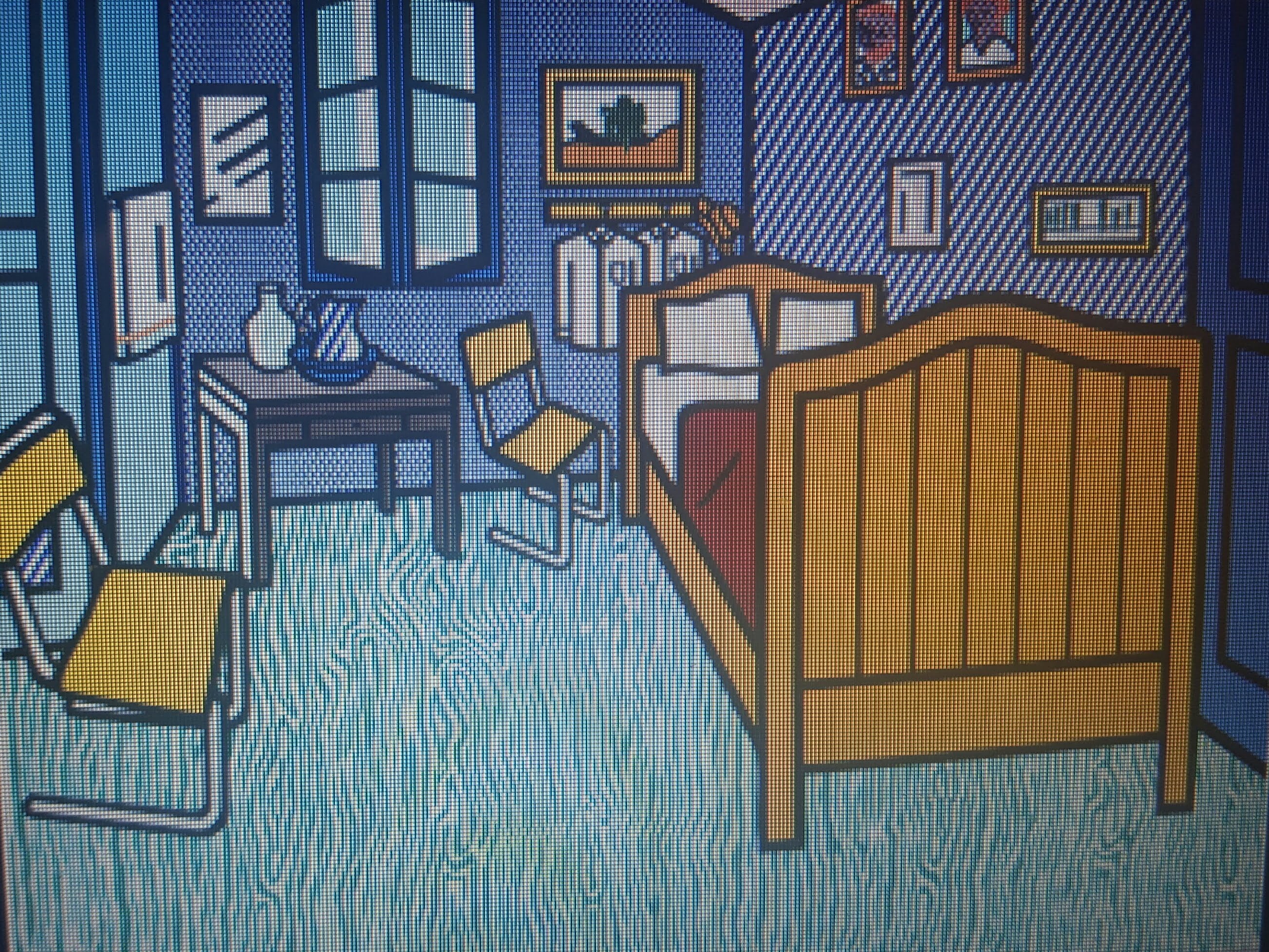
For me, it is a “straightened up” version of the original painting. He replaced the chairs with modern flattened chairs and the shirts became somehow crisply ironed businessman-type clothes. In his Arles period, van Gogh’s favourite colour was yellow, in Lichtenstein’s work the yellows are brightening up the room.
This is a fresh, humourous approach with respect. Lichtenstein himself said : ” The things that I have apparently parodied, I actually admire.”

 LaraDraw